








CAF Strategy Conference: Ouahbi – the youth developer who carried Morocco’s new generation to another World Cup quarter-final
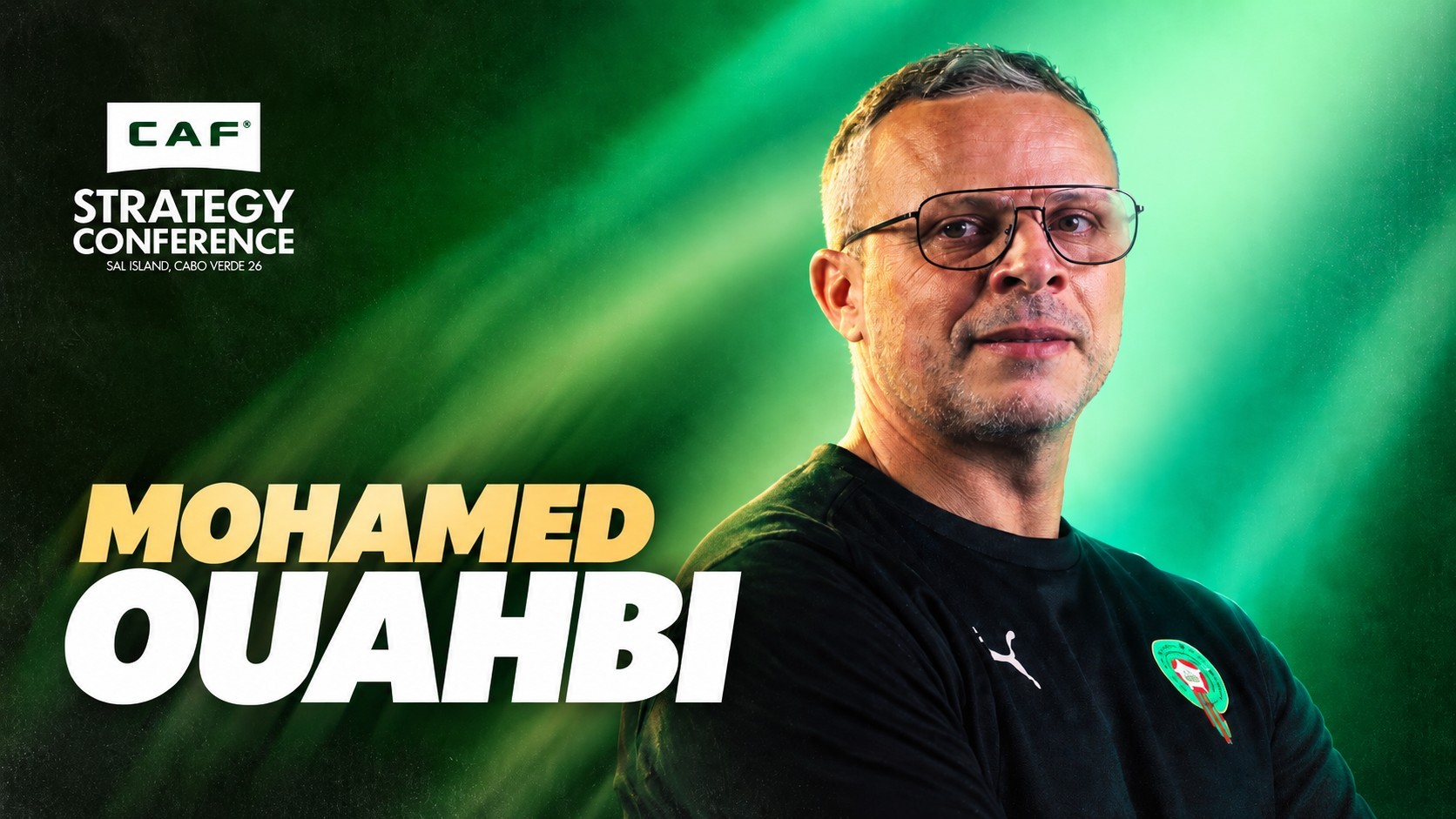
Mohamed Ouahbi will arrive at the CAF Strategy Conference in Cabo Verde with one of the clearest examples of how long-term investment in youth development can feed directly into success at senior international level.
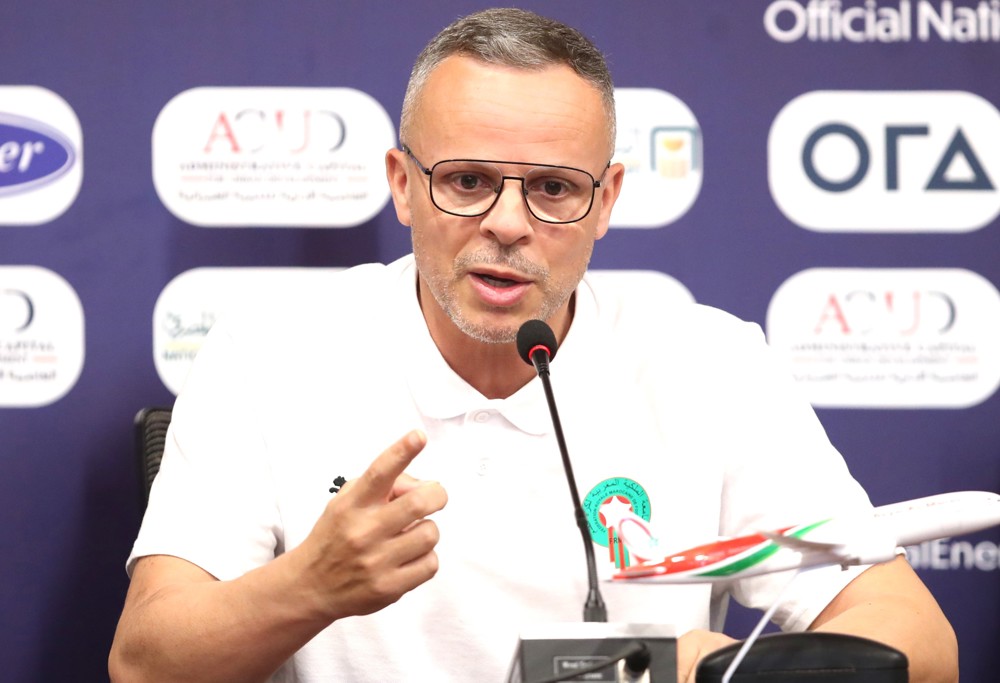
The 49-year-old was appointed Morocco coach only three months before the FIFA World Cup 2026, replacing Walid Regragui after the Atlas Lions had already established themselves among the leading sides in world football.
Despite the limited preparation time, Ouahbi guided Morocco through the group stage and into the quarter-finals, where their campaign ended with a 2-0 defeat by France. In doing so, Morocco became the first African nation to reach the last eight at consecutive World Cups.
His relevance to the CAF Strategy Conference goes beyond those results.
Ouahbi’s career has been built around player development, knowledge transfer and the progression of young footballers – themes that sit at the heart of CAF’s wider discussions on how African football can turn recent World Cup progress into sustainable success on the road to 2030.
And having moved from youth football to winning the FIFA U-20 World Cup with Morocco before taking the senior side deep into the 2026 tournament, Ouahbi offers a particularly strong example of how investment in coaching and youth pathways can produce results at the highest level.
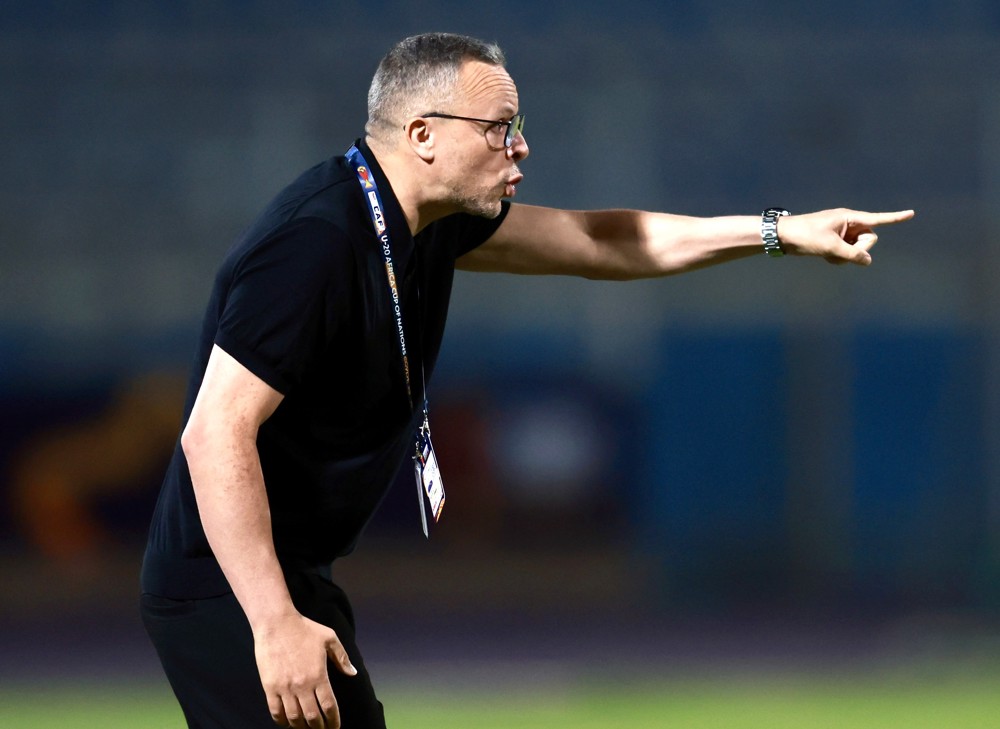
From Anderlecht’s academy to Morocco’s youth system
Born in Belgium, Ouahbi developed his reputation largely away from the spotlight.
Before entering international management, he worked in youth development at Belgian club Anderlecht, one of Europe’s most respected academies, and won the Belgian Under-17 championship in 2018.
That experience shaped a coaching philosophy centred on developing players rather than simply managing results.
For Ouahbi, player education and performance are closely linked. FIFA highlighted his belief that passing knowledge to young players is central to coaching, an approach that later became visible in the identity of his Morocco teams.
His next major step came within Morocco’s national-team structure.
Rather than being parachuted directly into the senior team, Ouahbi worked with the country’s younger generations and became one of the most important figures in Morocco’s wider development programme.
That pathway is particularly relevant to the Strategy Conference because it demonstrates the value of linking youth coaching, national-team structures and senior international football.
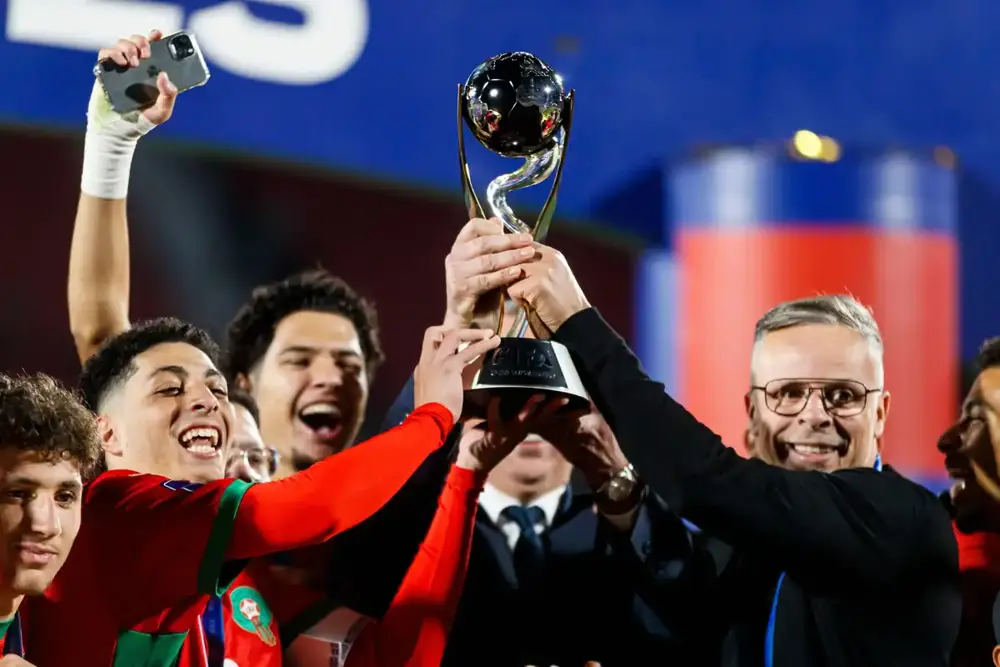
World champion before taking the senior job
Ouahbi’s breakthrough on the global stage came with Morocco’s Under-20 team.
At the FIFA U-20 World Cup 2025 in Chile, he guided Morocco to the title, defeating Argentina 2-0 in the final.
The tournament also highlighted the individual quality emerging through Morocco’s development system, with Othmane Maamma winning the adidas Golden Ball and Yassir Zabiri taking the Silver Ball.
That achievement strengthened Ouahbi’s reputation as one of the continent’s leading development coaches.
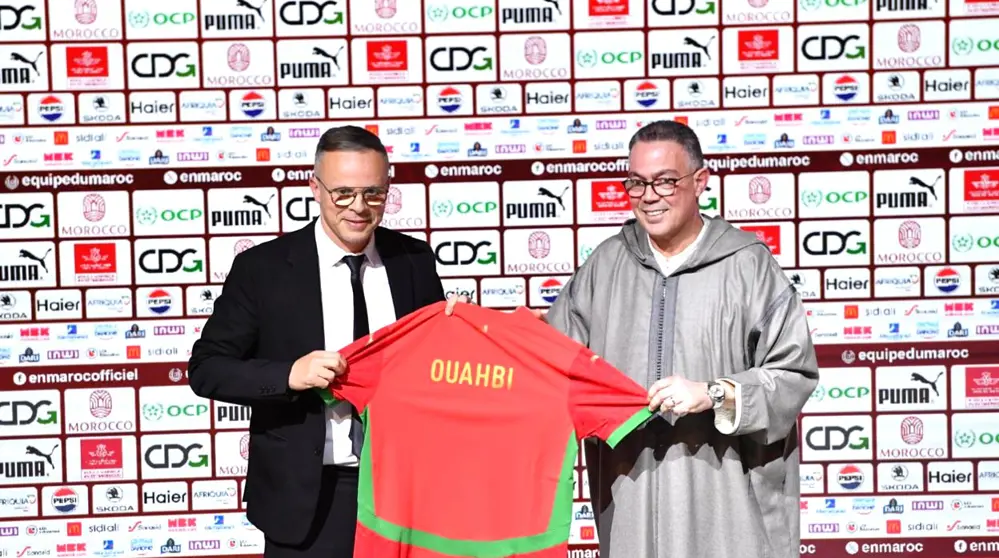
When Morocco decided to make a change at senior level in March 2026, less than 100 days before the World Cup, the federation turned to a coach who already understood the country’s football philosophy and many of the players coming through its system.
The Royal Moroccan Football Federation described the appointment as part of its wider “Morocco 2030” roadmap, intended to connect the senior team, youth development, women’s football and long-term performance structures.
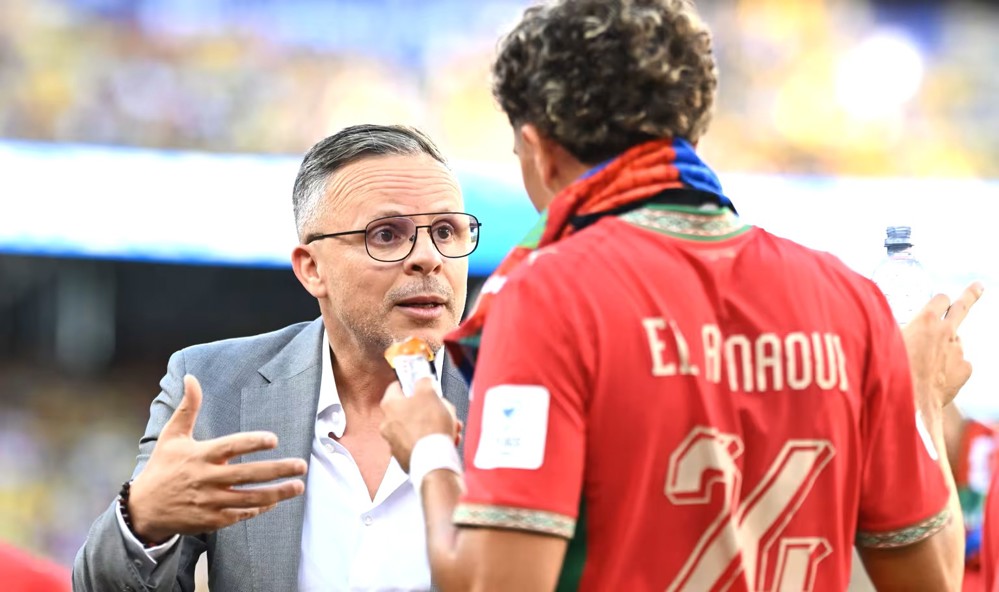
Carrying the 2022 legacy forward
Ouahbi inherited a demanding job.
Morocco had become the first African and Arab nation to reach a World Cup semi-final in Qatar in 2022, meaning expectations surrounding the Atlas Lions had changed dramatically.
His challenge was therefore not simply to qualify from the group stage but to prove that the 2022 run had not been a one-off.
Morocco began the 2026 tournament with a 1-1 draw against five-time champions Brazil, followed by a 1-0 victory over Scotland and a 4-2 win against Haiti to finish second in Group C.
The Atlas Lions then eliminated the Netherlands on penalties in the Round of 32 after a 1-1 draw, before beating co-hosts Canada 3-0 in the Round of 16.
Their campaign ended against France in the quarter-finals, with goals from Kylian Mbappé and Ousmane Dembélé securing a 2-0 victory for the Europeans.
Morocco nevertheless finished among the final eight teams in the competition and became the first African side to reach successive World Cup quarter-finals.
Building one generation into the next
One of the most important features of Ouahbi’s World Cup team was the blend between experienced players and a new generation.
Nine members of the squad had been part of Morocco’s historic 2022 World Cup campaign, while younger players were increasingly being integrated into the senior team.
That continuity reflects the system Ouahbi had already worked within at youth level.
His knowledge of developing players made him particularly well placed to bridge the gap between Morocco’s established stars and the young footballers emerging behind them.
That is also what makes his experience relevant to the CAF Strategy Conference.
A development model for the Road to 2030
CAF’s Strategy Conference will examine how Africa’s 10 World Cup representatives performed in 2026 and how those lessons can be transformed into practical progress ahead of 2030.
Ouahbi’s journey provides a case study in how youth development, coach education and continuity between age-group teams and the senior national side can contribute to sustained international competitiveness.
He moved from academy football to youth international coaching, became a world champion at Under-20 level and then, within a year, led the senior Atlas Lions to another World Cup quarter-final.
For African football leaders gathering in Sal, that progression offers an important lesson.
World Cup success does not begin at the World Cup.
It is built years earlier through coaching structures, player development, technical planning and a clear pathway from youth football to the senior game.
That is the experience Ouahbi will bring to Cabo Verde – not only as a coach who took Morocco into the last eight of the World Cup, but as a product of a development system designed to make those performances repeatable.