










Nigeria’s Winning Spirit Through Generations: From Trailblazers to Torchbearers
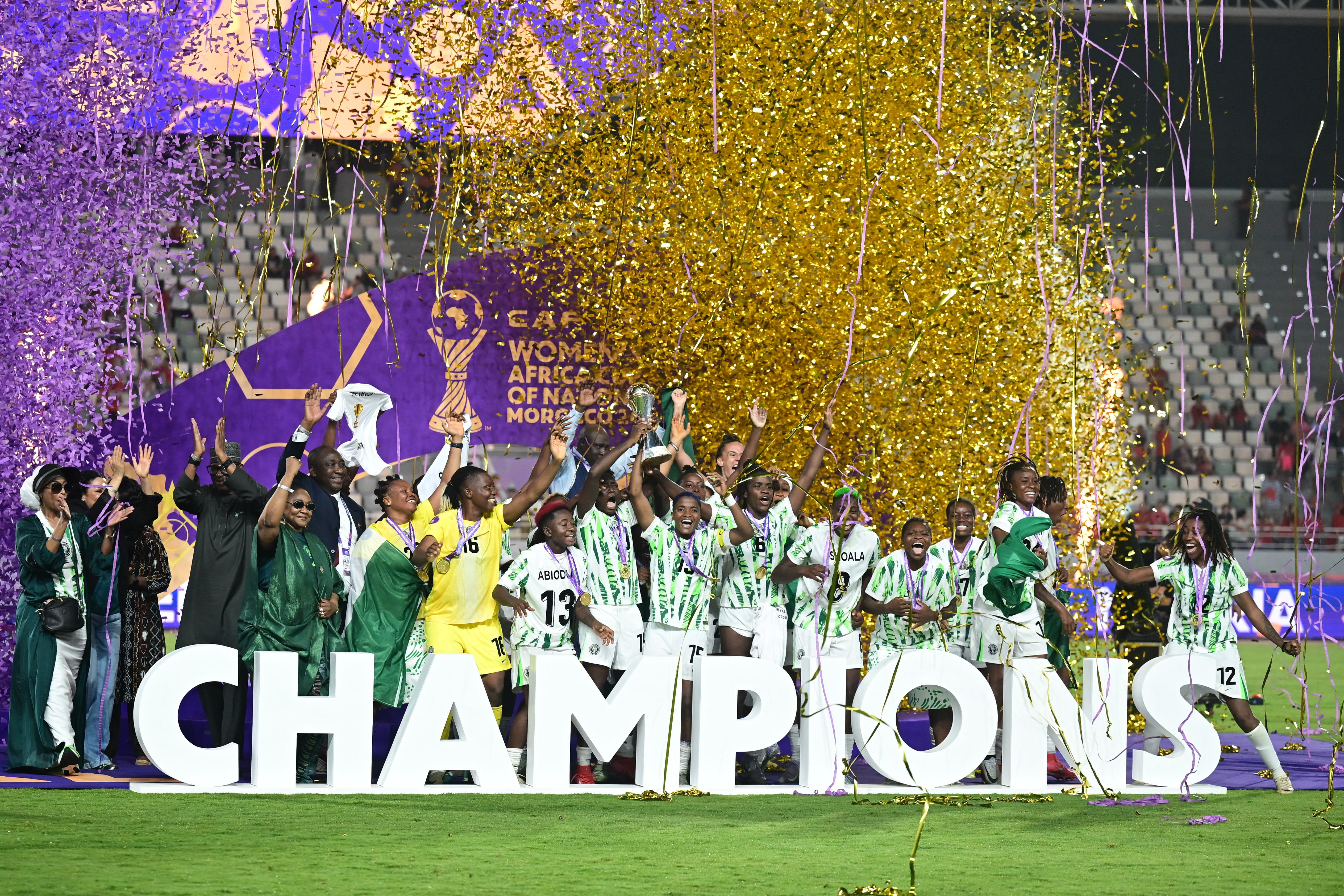
As the countdown begins to the Morocco 2026 TotalEnergies Women’s Africa Cup of Nations (WAFCON) in Morocco, Nigeria’s Super Falcons are once again looking to draw strength from an enduring legacy built across generations.
The West African giants are the only African side and one of seven teams to have featured at all the FIFA Women’s World Cups, eyeing an eleventh title at WAFCON 2026, which also serves as Africa’s qualifier for the 2027 FIFA Women’s World Cup in Brazil.
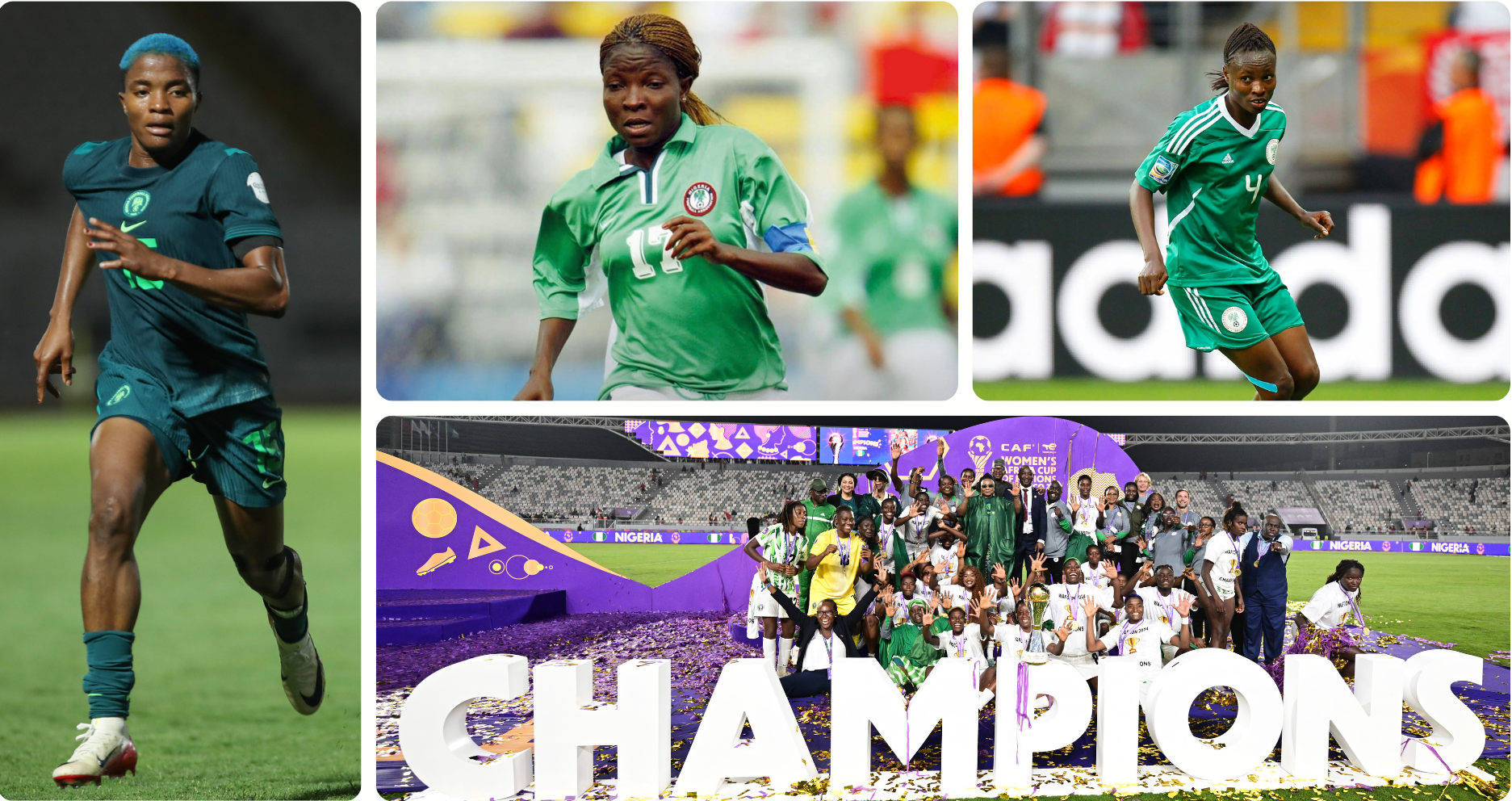
From the fearless pioneers of the 1990s, to the ruthless goal machines of the 2000s, and now to the versatile, tactically astute modern stars, Nigeria’s winning spirit has not been accidental. It has been deliberately forged, through sacrifice, leadership, discipline, and an unshakable belief that the Super Falcons belong at the summit of African football.
Three legends, Florence Omagbemi, Perpetua Nkwocha, and Rasheedat Ajibade, embody that enduring spirit.
Florence Omagbemi: The Pioneer Who Built a Foundation Beyond Her Era
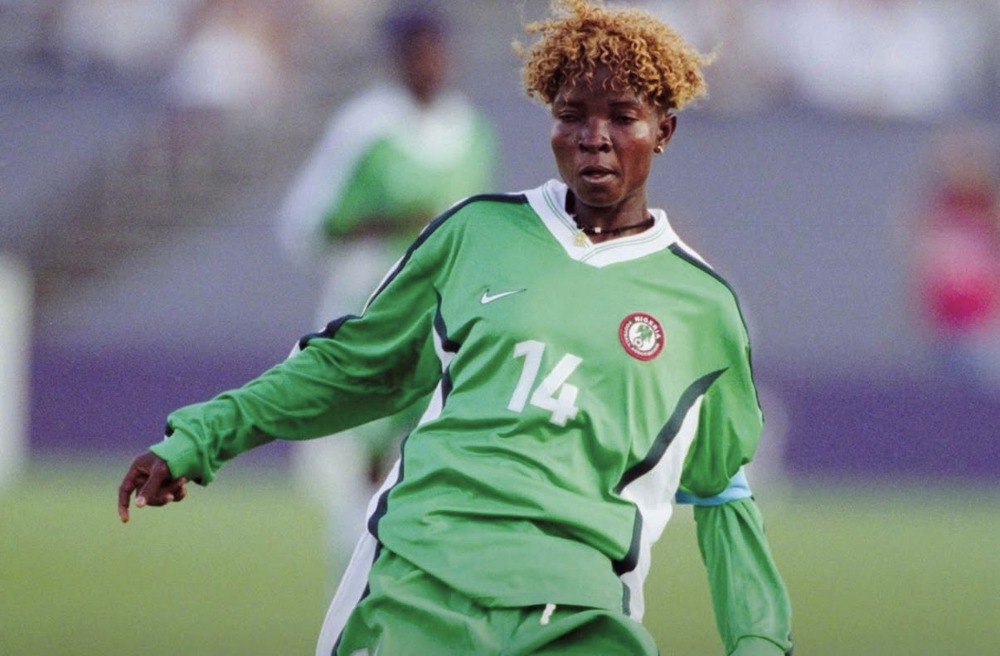
Before packed stadiums and global recognition, some pioneers played for pride, not pay, with Florence Omagbemi being one of them. A defender of intelligence and authority, Omagbemi captained Nigeria during her playing years (1991–2004) and later etched her name deeper into history by winning WAFCON both as the only player and as a coach - a rare distinction in African women’s football.
Reflecting on her early days, Omagbemi, who defied convention, explained that the mission went beyond winning trophies in an era when parents discouraged girls from playing football.
“As one of the pioneer members of the Super Falcons, my major focus then was to help my country, Nigeria, build a team that would outlive our time. My emphasis then was not really on monetary gain. Showcasing what the girls could bring to the table, while addressing the societal norms surrounding women’s football," Omagbemi exclusively told CAFOnline.com.
“No parents would allow their daughter to venture into football, but as a Warri girl, I would sneak out to play street football with boys. It eventually paid off, and the rest is history.”
Her leadership came early as she became captain at a young age, commanding respect from older teammates while balancing humility and authority. She saw the captain’s role as an extension of the coaching staff, a custodian of discipline.
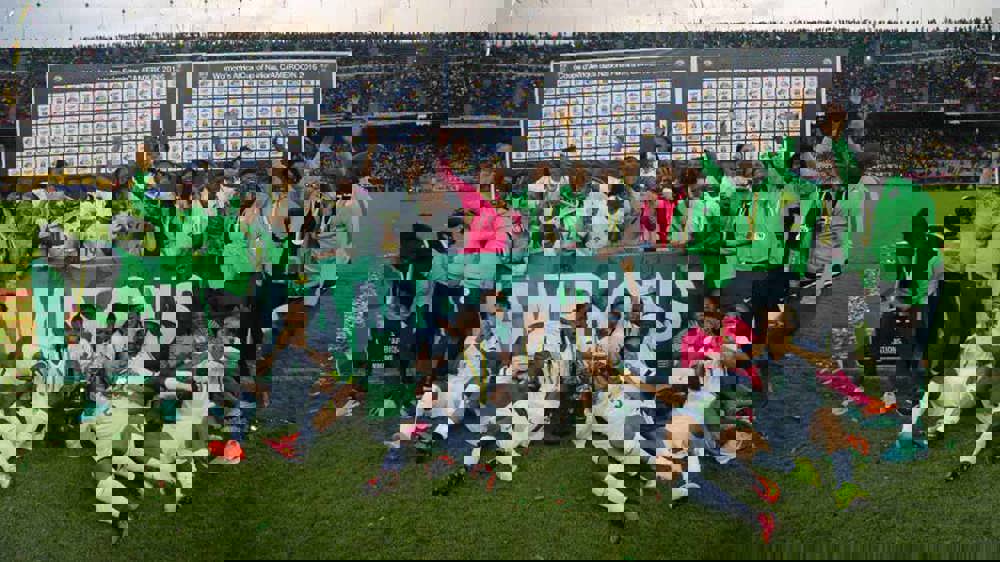
“Even though I called the older ones ‘aunty’ off the field, I was their leader on the field, and they respected me. At times, in moments of crisis, I would step in. Leadership is like one’s character. It is what other people think about you,” the winner of four WAFCON titles," she said.
“In every football team, the captain is like an assistant coach. My role as Super Falcons captain was to instill discipline in myself for others to see. I led by example. Self-discipline has helped me even to this day.”
Omagbemi’s deep understanding of Nigeria’s mentality was evident in 2016 when she guided the Falcons to yet another continental crown as head coach. The 51-year-old remains the only individual to win WAFCON as both captain and coach.
“Yes, I remain the only African woman to win the AWCON title as a captain and coach. It is an honour I cherish so much, and I give God the glory. My prayer is for another person to follow in my footsteps,” she continued.
Her vision, however, stretches beyond Africa as she still recalls Nigeria’s dramatic 1999 Women’s World Cup campaign in the United States, where the Falcons came from 0–3 down to draw 3–3 against Brazil before losing to a golden goal free-kick.
“It would be great to see an African women’s football team exceed that mark, to reach the final and even win the FIFA Women’s World Cup.”
That dream now fuels the road to Morocco 2026 and Brazil 2027.
Perpetua Nkwocha: The Ruthless Standard-Setter
If Omagbemi laid the foundation, Perpetua Nkwocha built a fortress of dominance. Across four WAFCON tournaments, Nkwocha finished as top scorer, an extraordinary record that cemented her as one of Africa’s most prolific forwards between 1999 and 2015.
Powerful, clinical, and decisive, she thrived in decisive moments. For Nkwocha, scoring goals was a responsibility to the collective.
“I believe my dominance during my era came from a combination of hard work, focus, and a love for the game. I always aimed to perform consistently, especially in crucial matches like the African Women's Cup of Nations, where every goal and every play matters,” Nkwocha told CAFOnline.com.
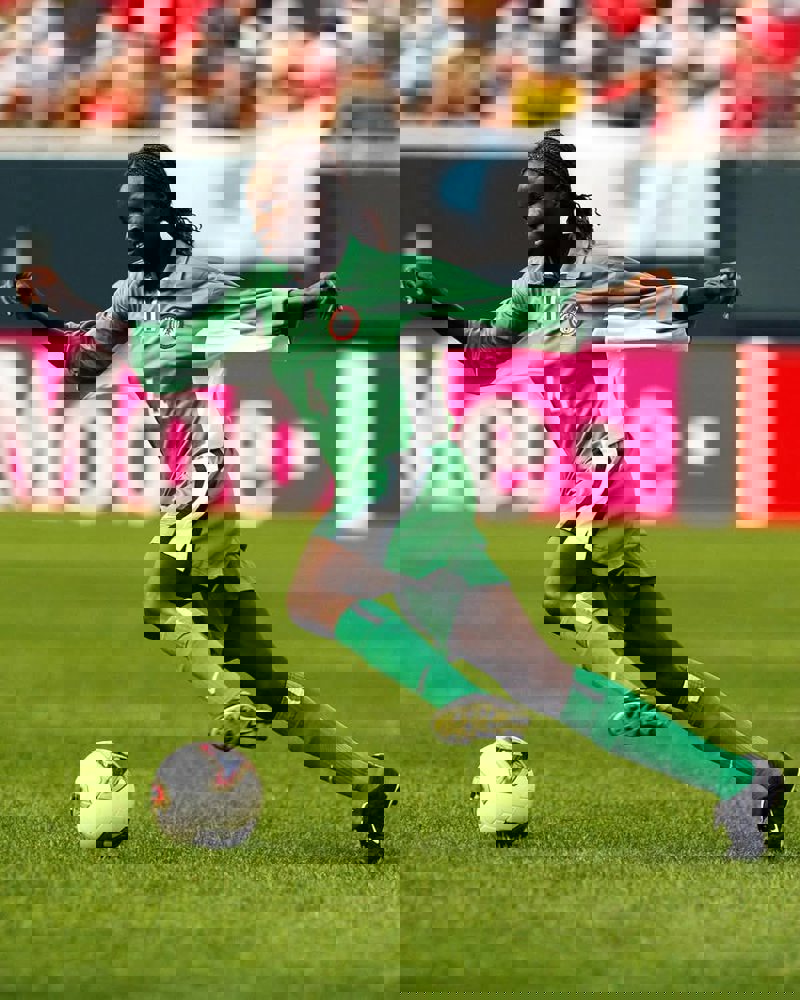
“Beyond scoring, I tried to lead by example, guiding my teammates, staying calm under pressure, and using my experience to help the team succeed. For me, it was never just about individual achievement. It was about inspiring the team and helping Nigeria maintain its place at the top of African women’s football.”
Her presence alone instilled belief. But perhaps her greatest contribution was cultural, embedding resilience and professionalism into the team’s DNA.
“When you know there’s someone who can deliver in critical moments, it lifts the whole team’s confidence and lets everyone play without fear," said the Nigerian superstar, who scored a record four goals in the final at the 2004 African Women's Championship.
“Over time, this helped shape a culture within the Super Falcons where confidence, resilience, and the determination to win became part of our identity across generations.”
Today’s Falcons still operate within that standard, according to the four-time CAF Women's Player of the Year in 2004, 2005, 2010 and 2011.
“I believe I set the standard for professional excellence through discipline, hard work, and a commitment to continuous improvement. Today, I see the modern Super Falcons emulating that same professionalism, mental toughness, and pride in representing Nigeria.”
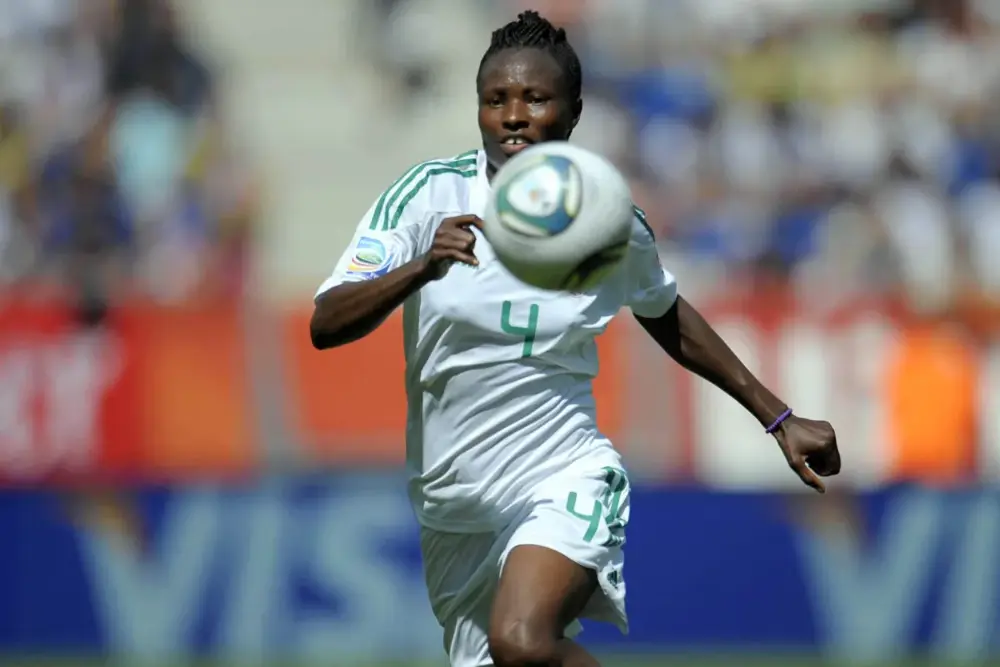
Rasheedat Ajibade: The Modern Torchbearer
Now, the mantle rests with a new generation - dynamic, global, and tactically sophisticated, with Rasheedat Ajibade standing at the forefront.
Versatile enough to operate across the frontline and midfield, Ajibade represents the modern Super Falcons identity: team-first, adaptable, and mentally resilient in an increasingly competitive African landscape.
“I contribute to maintaining Nigeria’s winning culture in the modern era of the Super Falcons by leaning on my team spirit and strength, complementing my teammates because we are all not perfect. It is all about utilising our efforts to achieve a lot as a team.”
Unlike previous eras built around standout individuals, Ajibade emphasizes collective synergy as her leadership philosophy is rooted in service.
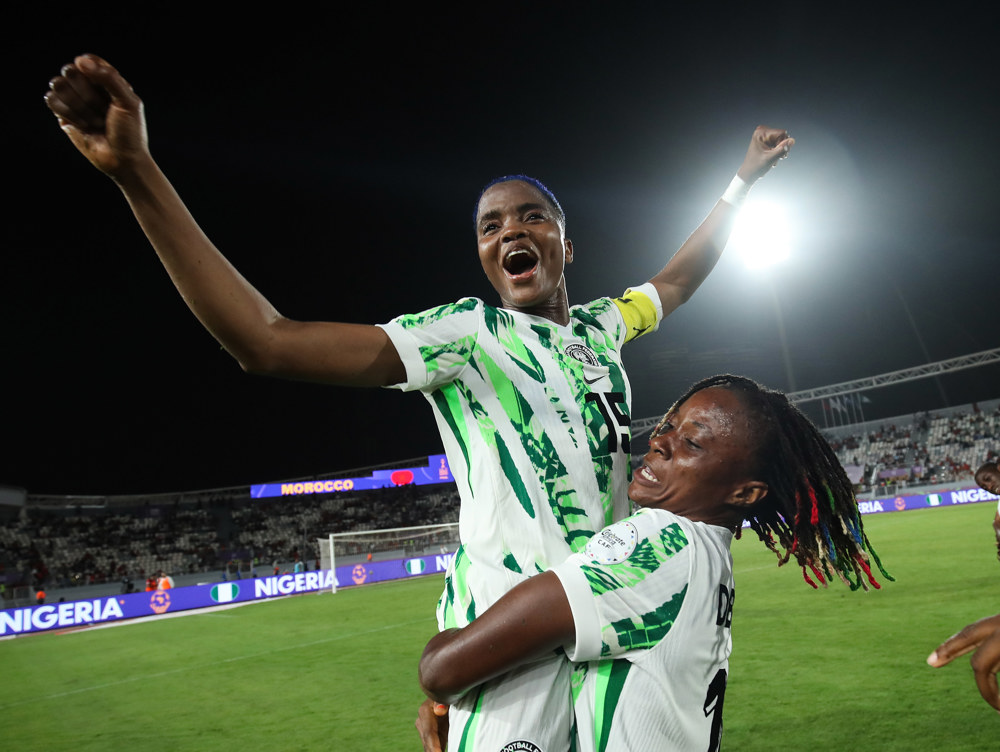
“In the modern era, it’s all about team and not individual play. I play as an attacker, come back to midfield, and defence. We have to connect together as a team, complementing our strengths and weaknesses," said the WAFCON 2024 Player of the Tournament.
“My leadership style is all about service, first leading myself and by example to do the right thing. Then, using my strengths to complement the team.”
Beyond tactics, Ajibade prioritizes integration and unity, particularly as more foreign-born players join the squad.
The PSG playmaker also references the heightened pressure of recent WAFCON tournaments, including the intense final against host nation Morocco in 2024.
“The intensity at WAFCON is so high now. It requires versatility, composure, defensive work rate, the ability to go back and forth. It’s all about composure under pressure,” she continued.
“It’s all about encouragement and how I can help young players integrate into the team. Everybody has something to contribute irrespective of age or location. It’s about being the person you want others to be, modelling discipline, confidence, and the right mentality.”
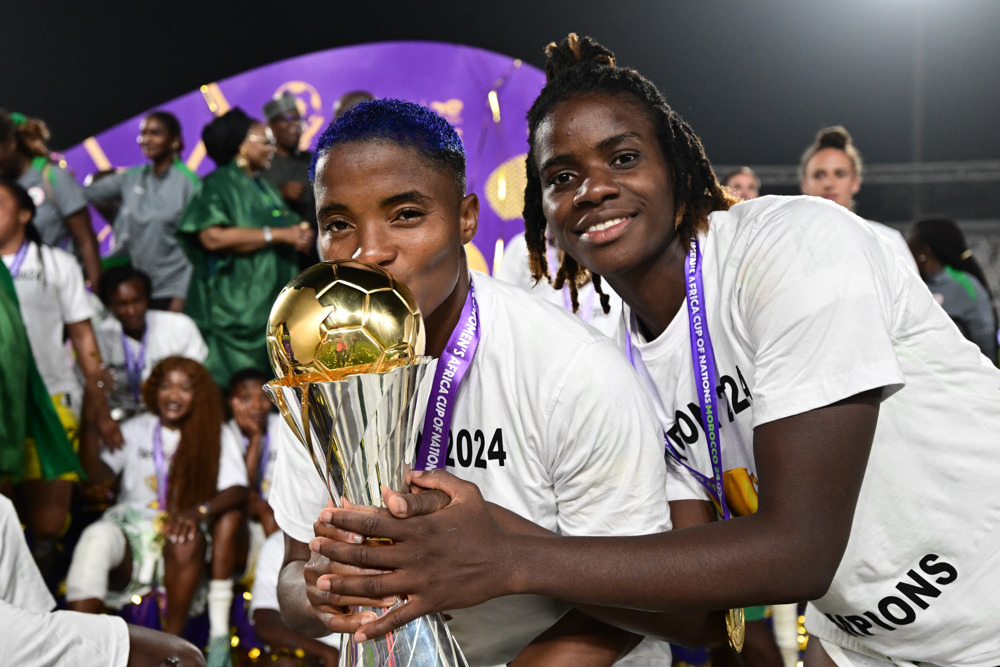
Morocco 2026: A Legacy on the Line
WAFCON 2026 in Morocco carries higher stakes than ever. Beyond continental supremacy, it offers qualification tickets to the 2027 FIFA Women’s World Cup in Brazil. For Nigeria, it is not merely a tournament but also a defense of heritage.
From Omagbemi’s pioneering courage, to Nkwocha’s ruthless excellence, to Ajibade’s modern tactical leadership, the Super Falcons’ identity has evolved, but the essence remains unchanged.
Nigeria’s winning spirit is not confined to a single era, even as the defending champions. It is a relay - passed from generation to generation. And as Morocco 2026 approaches, the baton is firmly in capable hands.