














Saibari strike sends Morocco top and makes World Cup history after tense win over Scotland
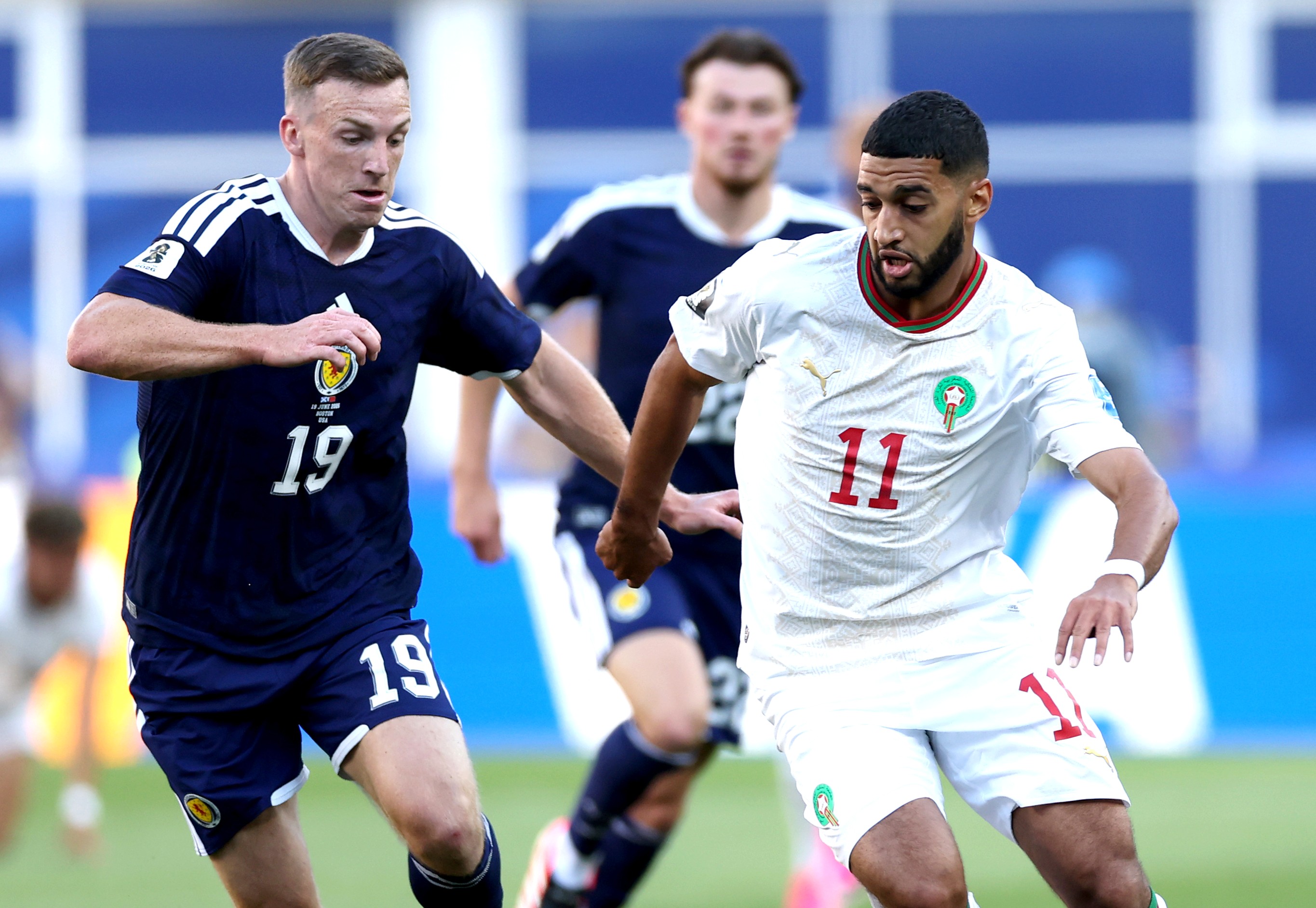
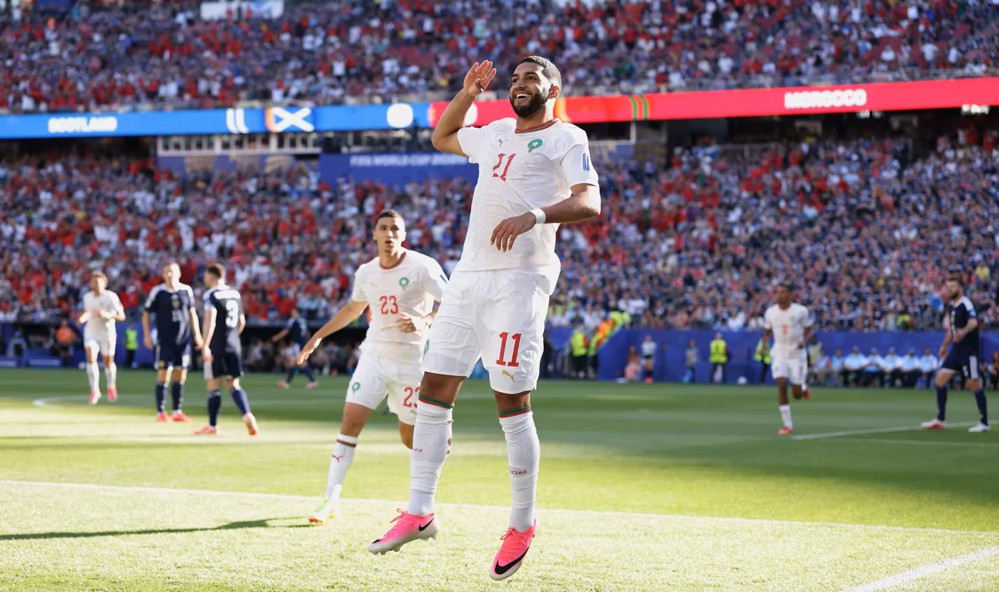
Morocco moved to the top of Group C at the 2026 FIFA World Cup after Ismael Saibari’s early goal secured a hard-fought 1-0 victory over Scotland at Boston Stadium in Foxborough on Friday night.
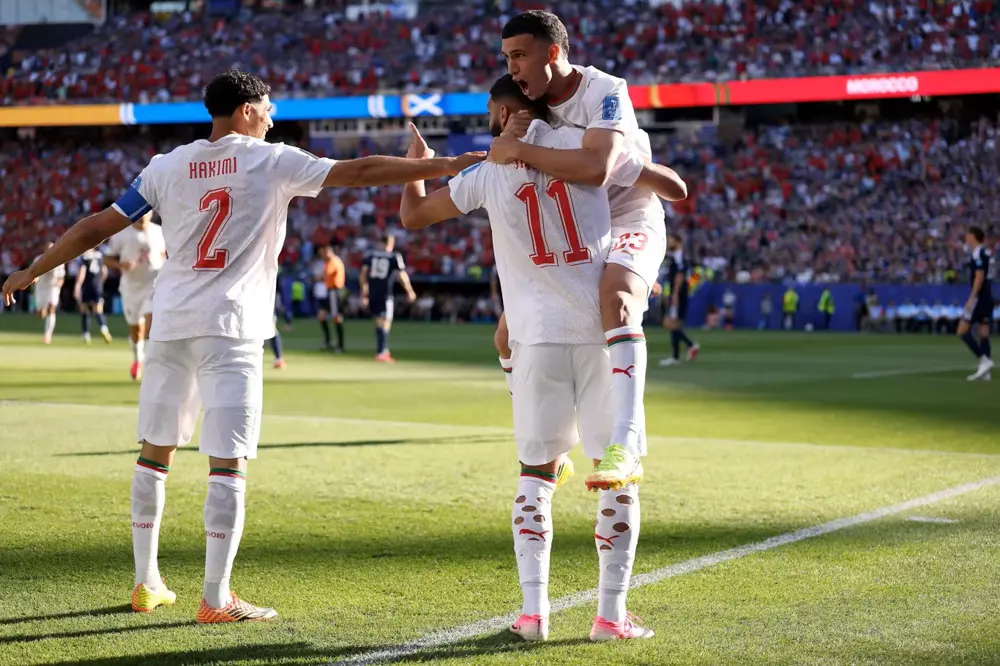
The Atlas Lions needed only two minutes to take control of the match, with Saibari finishing emphatically after a clever pass from Brahim Diaz split the Scottish defence.
The Moroccan forward ran beyond the back line, controlled the ball inside the area and powered a right-footed effort past Angus Gunn into the roof of the net.
It proved to be the decisive moment of the contest and a historic one for Morocco.
Saibari’s goal was the fastest of the 2026 World Cup so far and also Morocco’s quickest ever goal at the tournament.
The victory takes Morocco to four points from two matches after their opening 1-1 draw against Brazil, leaving them top of Group C before Brazil’s match against Haiti later in the day.
Scotland, who began their campaign with a 1-0 win over Haiti, remain on three points after suffering their first defeat of the tournament.
Morocco coach Mohamed Ouahbi kept faith with the same core that impressed against Brazil, using a midfield built around Diaz, Azzedine Ounahi, Bilal El Khannouss and Saibari.
Scotland, meanwhile, set up with a five-man defensive line, with Scott McTominay and Lewis Ferguson in central midfield, Ryan Christie and John McGinn operating wide, and Che Adams leading the attack.
Despite Scotland’s defensive structure, Morocco started with speed, confidence and aggression.
The early goal gave the Atlas Lions the platform they needed, and they controlled much of the first half with sharper passing and better movement in the final third.
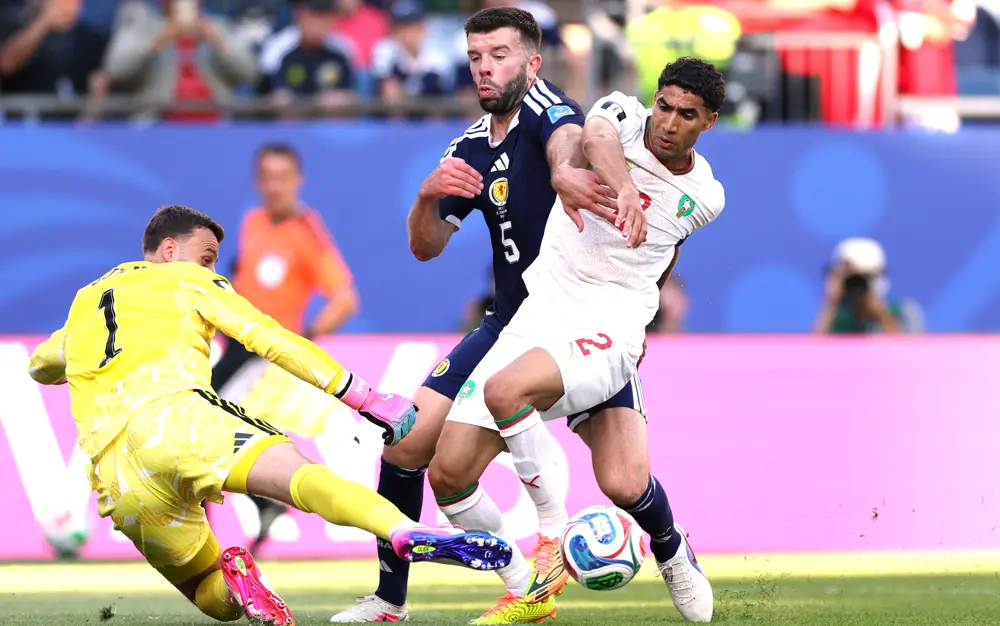
Saibari almost scored again in the 10th minute after a fine cross from Ounahi, while Achraf Hakimi forced Gunn into a save with a powerful effort in the 18th minute.
Morocco continued to create chances, with Neil El Aynaoui failing to direct his effort on target after a Diaz delivery in the 30th minute.
El Khannouss also had a golden opportunity to extend the lead in the 36th minute, but his shot went over the crossbar.
Scotland improved before half-time but struggled to create clear chances against a compact Moroccan defence.
The pattern continued after the break, with Morocco again threatening to put the result beyond Scotland.
Saibari came close to a second goal in the 50th minute when his deflected effort struck the crossbar after El Khannouss had broken down the left and delivered a dangerous low cross.
Two minutes later, Gunn was called into action again when El Khannouss nearly turned in a near-post corner from Hakimi.
Morocco also went close through Hakimi, whose effort flashed past the post in the 62nd minute.
Scotland tried to respond, with Christie shooting from outside the area in the 64th minute, before McTominay struck into the side-netting late on.
The final 15 minutes belonged largely to Scotland’s pressure.
McGinn, Ben Gannon-Doak and McTominay pushed forward as the Tartan Army urged their team towards an equaliser.
But Morocco defended with discipline, managed the closing stages intelligently and held on for a valuable win.
Saibari was named Player of the Match after another decisive World Cup performance.
He also became only the second African player to score in each of his first two World Cup appearances, after Egypt’s Mohamed Salah did so against Russia and Saudi Arabia in 2018.
For Morocco, this was a different type of victory from the draw against Brazil.
It was less about statement football and more about control, concentration and resilience.
After two matches, the Atlas Lions have shown they can compete with one of the tournament favourites and also grind out a result against a physical European side.
Their final group match against Haiti now offers them a major chance to secure qualification for the knockout stage.
For Scotland, the defeat is a setback, but their opening win means they remain in contention.
For Morocco, however, the message is clear: the team that made history in Qatar is again showing it belongs on the World Cup stage.