





CAF announces Financial Turnaround with Revenues exceeding USD 280 Million and USD 31 Million Profit at 48th Ordinary General Assembly in Nigeria
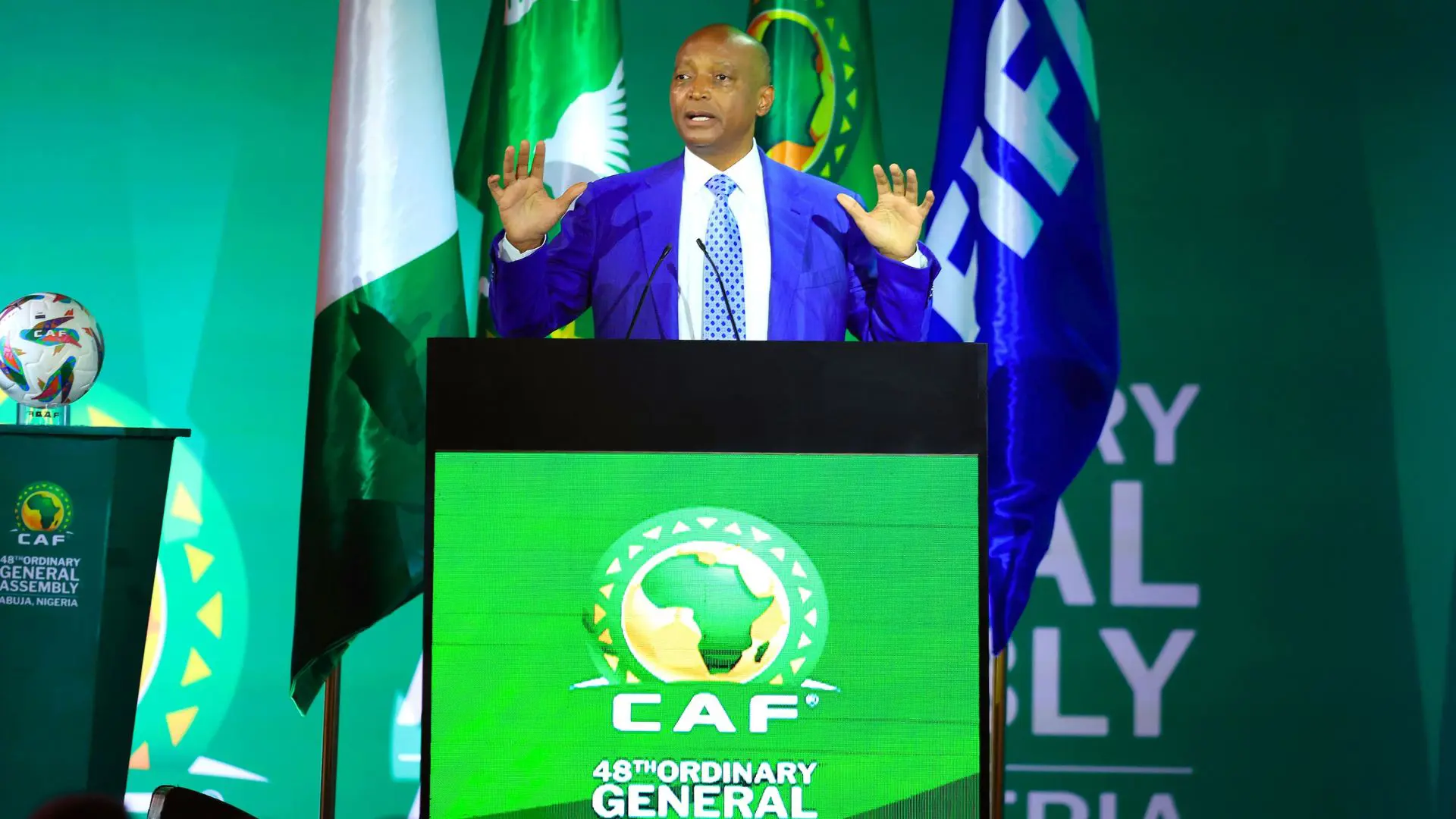
The Confédération Africaine de Football’s (CAF) return to financial stability under the leadership of CAF President Dr Patrice Motsepe has been reflected in the 2026 Annual Financial Statements released by CAF during the 48th CAF Ordinary General Assembly (“OGA”) in Abuja, Nigeria today, 21 November 2026.
The return to profitability, improved reserves and strong cash position provide CAF with a more sustainable financial foundation from which to continue investing in the development and growth of African football.
Five years ago, CAF was in a financial crisis with debt of over USD 100 Million.
A turnaround strategy implemented over the last five years and driven by CAF President Dr Patrice Motsepe has put CAF on a path to self-sustainability.
Today, CAF reported a net profit of USD 31.2 million. CAF's total revenue increased to USD 284 million, representing growth of more than 200%.
CAF's reserves also improved significantly, moving from a deficit of USD 16.8 million to a positive position of USD 14.4 million, while cash balance position as of the year end June 2026 stood at USD 118.8 million.
Beyond the improved financial position for the year end 2026, there has been substantial increase in financial support provided to its Member Associations, Zonal Unions, clubs and competitions.
Member Associations benefit from 250% increase in financial support
One of the central priorities of Dr Motsepe's leadership has been to increase direct financial assistance to CAF's 54 Member Associations to accelerate the development and growth of football across Africa.
- Since 2021, annual financial support to each Member Association has increased by 250%, from USD 200,000 to USD 700,000, with the latest increase taking effect in July 2026.
- The increase brings CAF to 70% of its objective of providing USD 1 million annually to each Member Association.
This additional financial support is aimed at strengthening football development programmes, improving governance and administration, and creating further opportunities for youth and women's football across the continent.
- CAF has also increased its annual financial allocation to each of its six Zonal Unions by 80%, from USD 500,000 in 2021 to USD 900,000 in 2026.
Investment in African club football reaches USD 48 million
Total financial investment in Clubs has increased by 153%, from USD 19 million in 2021 to USD 48 million in 2026.
- The winners of the TotalEnergies CAF Champions League now receive USD 6 million, compared with USD 2.5 million in 2021, while the winners of the TotalEnergies CAF Confederation Cup receive USD 4 million, up from USD 1.25 million over the same period.
- The overall prize money available in the TotalEnergies CAF Champions League has increased to USD 19.6 million, while the TotalEnergies CAF Confederation Cup prize fund has risen to USD 11.9 million.
- CAF has also doubled solidarity payments to clubs eliminated in the preliminary stages of its Interclub competitions, from USD 50,000 to USD 100,000 per club.
Record prize money for Africa's flagship Competitions
CAF's increased revenue has enabled unprecedented investment in prize money across its leading national team competitions.
- The winners of the TotalEnergies CAF Africa Cup of Nations Morocco 2025 received a record USD 10 million, double the USD 5 million awarded to the winners of the 2021 edition.
- The overall prize money pool increased by more than 40%, from USD 24.8 million in 2021 to USD 35 million for the 2025 competition.
- Women's football has also been a major beneficiary of CAF's increased investment. The winners of the TotalEnergies CAF Women's Africa Cup of Nations Morocco 2026 received USD 2 million, compared with USD 200,000 in 2021, representing an increase of 900%.
- The overall WAFCON prize fund increased from USD 975,000 in 2021 to USD 5.8 million in 2026, while the tournament expanded from 12 to 16 participating national teams.
Stronger financial governance and long-term sustainability
The 48th CAF OGA also highlighted significant progress in improving financial governance, reporting and accountability.
In 2026, CAF addressed a decade-long gap in timely financial reporting, with two sets of accounts presented as part of its efforts to strengthen financial management and transparency.
Further Enquiries:communications@cafonline.com
CAF | Communications Division